Orthopedic Regulatory
Implants Judged in Decades, Cleared in Months.
Regulatory strategy for orthopedic devices — where a hip that must last twenty-five years in the body is cleared on bench data and a predicate.

Free proposal · three minutes
Get your free orthopedic proposal
No sales call. No account. No obligation.
Start my free proposalThe Trial Orthopedics Runs Is a Machine, Not a Cohort.
Most orthopedic implants reach the market through 510(k) — cleared on substantial equivalence to a predicate, proven with mechanical bench testing rather than a randomized trial. Wear simulation, fatigue to millions of cycles, corrosion, and modular taper testing carry the evidence the FDA reviews. The product is judged as an engineered part before it is judged as a therapy.
But the market judges it over decades — through registry revision rates and metal-on-metal history that permanently reset the field's expectations. We build orthopedic programs that satisfy the bench today and survive the registry later, because the clearance is not the finish line.
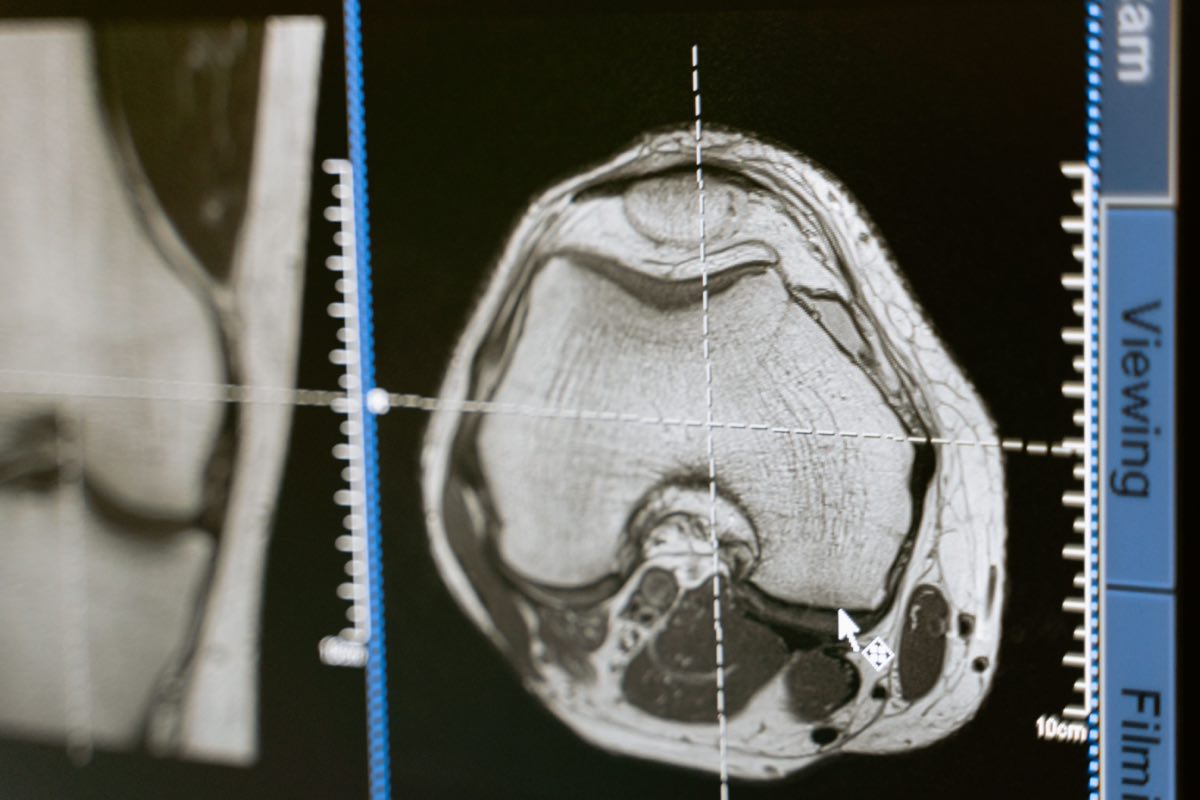
Ten million cycles on a simulator stands in for years in a body — how you justify that model is the submission.
Your Predicate Chooses Your Evidence — Before You Design Anything.
In orthopedics the predicate is the single most consequential regulatory choice. It sets the testing burden, the claim language, and whether you clear in six months or spend three years in De Novo.
Same design, same material
Traditional 510(k)A line extension of a cleared implant family — bench testing to the recognized ASTM and ISO standards, comparative to the predicate, and a straightforward substantial-equivalence argument.
New material or coating
510(k) + full characterizationA novel bearing surface, coating, or alloy pulls biocompatibility per ISO 10993, wear-debris characterization, and often a bridging rationale the reviewer will press on.
New mechanism, no predicate
De Novo or PMAA genuinely new fixation or motion-preserving concept has nowhere to anchor — expect clinical data, a benefit-risk case, and special controls written around your device.
The trap is picking a predicate for speed and inheriting its indication language — a narrow predicate can lock you out of the claim your commercial team was counting on. We choose the predicate against the label you actually want, then build the test matrix backwards from it.
Not Every Orthopedic Device Answers to the Same Reviewer.
Joint reconstruction, spine, trauma, sports medicine, extremities, and orthobiologics each carry their own evidence expectations — and some are not devices at all.
Joint Reconstruction
Where wear, fatigue, and modular taper testing dominate, and registry revision rates set the long-term bar the market remembers.
Spine
Where fusion hardware clears on bench data but motion-preserving discs face PMA and full IDE trials with radiographic and ODI endpoints.
Trauma
Plates, nails, and screws in a mature predicate space — where the regulatory work is speed, standards conformity, and not over-claiming.
Sports Medicine
Anchors, grafts, and repair systems where the tissue interface and the surgical technique guide carry as much weight as the implant.
Extremities
Smaller-volume implants where predicate families are thin and the economics rarely support an IDE trial.
Orthobiologics
Bone grafts, cell-based products, and substitutes that cross into CBER and the 361-versus-351 question — a different regulator entirely.

Registries publish survivorship by implant. Your clearance is an opinion; the revision curve is the evidence.
Orthopedics Has the Longest Memory of Any Device Field.
National joint registries publish revision rates by implant, by surgeon, by year. A device cleared on a clean bench package can still be indicted a decade later by its own survivorship curve — and the metal-on-metal recalls taught regulators to ask about wear debris and modular junctions before anyone is harmed, not after.
That history is now built into EU MDR, where orthopedic implants carry Class III scrutiny, clinical evaluation against real-world data, and PMCF that never ends. We plan the post-market evidence at design time, so the registry becomes your argument instead of your problem.
An Implant Recall Is a Twenty-Year Liability, Not a Quarter.
Orthopedic failures surface slowly, in patients who need revision surgery — which is why the regulatory bar is really about what you can prove will still be true in fifteen years.
is the service life an implant is expected to deliver — and the window over which a registry will publish your revision rate against your competitors'.
Wear, fatigue, corrosion, and taper testing to recognized ASTM/ISO standards carry the submission where clinical trials rarely do.
Under EU MDR, most implantable orthopedic devices face the highest scrutiny, ongoing clinical evaluation, and PMCF without an end date.
Six Failure Modes We Are Brought In to Prevent.
In a field this predicate-driven, the expensive mistakes are made in the first month.
A predicate that caps your claim
Anchoring to a device whose cleared indication is narrower than the market you are building for — and discovering it after the test matrix is spent.
Bench testing to the wrong standard
Running an outdated ASTM revision or skipping a recognized consensus standard, then arguing method validity instead of results.
Wear debris unanswered
Presenting a new bearing surface without the debris characterization and biological response data the metal-on-metal era made mandatory.
Orthobiologics misrouted
Assuming a bone graft product is a device when its processing and claims put it under CBER's 361/351 framework — a wholly different pathway.
EU MDR treated as a translation
Filing the FDA package in Europe and meeting a notified body that wants clinical evaluation, equivalence data access, and PMCF you never planned.
No registry strategy
Launching with no plan to feed or answer national joint registries, then losing the narrative to someone else's survivorship analysis.
Orthopedic Regulatory Leadership That Knows the Bench.
Our orthopedic leads have run predicate strategy for implant families, defended wear and fatigue packages, and carried Class III implants through EU MDR with notified bodies.

"An orthopedic clearance is an argument that a machine will behave in a body for twenty years. Win it on the bench, and you still have to keep winning it in the registry."
The discipline we bring across reconstruction, spine, trauma, sports medicine, and orthobiologics.
From the newsroom
The record moves. Follow it.
Regulatory News is our independent newsroom — every story sourced to the primary record, published the day it lands. These are the beats that touch this page. RegulatoryNews.com →
- Devices510(k)s, De Novos, PMAs and EU MDR.
- FDAApprovals, clearances, letters and guidance.
- GuidanceDraft and final guidance, as it lands.
- DrugsPharmaceutical approvals, labels and pathways.
- Key datesDeadlines and comment periods, in one calendar.
- Full archiveEvery story we have published, searchable.
Building an Orthopedic Implant? Choose the Predicate Before You Choose the Design.
Bring senior orthopedic regulatory leadership in while the predicate, the claim, and the test matrix are still decisions rather than constraints.
Senior-led. Embedded in your team. No junior hand-offs.