Nanotechnology
At the Nanoscale, the Same Material Stops Behaving Like Itself.
Regulatory strategy for nanomaterials — characterization is the file, and the agencies review these products case by case, on the evidence you bring.

Free proposal · three minutes
Get your free nanotechnology proposal
No sales call. No account. No obligation.
Which markets matter in the next 18 months?
There Is No Nanotechnology Pathway. There Is Only Your Evidence.
FDA has never created a nano-specific approval route, and that is deliberate. Its long-standing position is that nanomaterials are reviewed under the existing frameworks — drug, device, biologic, combination — with attention to whether engineered dimensions change the product’s behavior. The agency asks two questions of any product it screens: is a material engineered at roughly 1–100 nm, and does it exhibit dimension-dependent properties even above that range?
Answer yes to either and you inherit no new pathway — just a higher burden inside the old one. The reason is physical: at this scale, surface area per unit mass explodes, and properties that were stable at bulk scale — reactivity, solubility, biodistribution, immune recognition — stop tracking the material’s name. Bulk safety data does not transfer down, and the file has to say why the nanoform is different.

Same chemistry, different surface. At the nanoscale, the material’s name stops predicting its behavior.
Nine Attributes That Have to Be Nailed Down Before Anything Else.
For a nanomaterial, characterization is the regulatory file. Each attribute below is a specification, a control strategy, and a place a program can fail.
Size & distribution
Not just a mean — the full distribution, by orthogonal methods that agree with each other.
A single number hides the tail that drives the toxicologyShape & morphology
Spheres, rods, tubes, and plates distribute and clear differently, whatever the chemistry says.
Aspect ratio is a biological variableSurface chemistry
Coatings, ligands, and functional groups — the part of the particle biology actually meets.
The interface is the productSurface charge
Zeta potential in physiologically relevant media, not just deionized water.
Charge drives protein corona and uptakeAgglomeration state
What the particles do in serum, buffer, and storage — as-dosed, not as-synthesized.
The dose the body sees is the agglomerateSurface area
The metric that often correlates with effect better than mass does.
Dose metrics decide the whole tox argumentPurity & residuals
Catalysts, surfactants, and synthesis residues that ride along at trace levels.
Trace at bulk scale is not trace at nanoscaleStability
Shelf life, dissolution, and transformation in biological environments over time.
A particle that dissolves is a different productBatch consistency
Reproducibility lot to lot and at scale — the attribute that kills the most programs.
Nano synthesis rarely scales linearlyThen the harder question: which of these are your critical quality attributes, and what control strategy holds them? A file that characterizes everything but controls nothing tells the reviewer you have a laboratory, not a product.
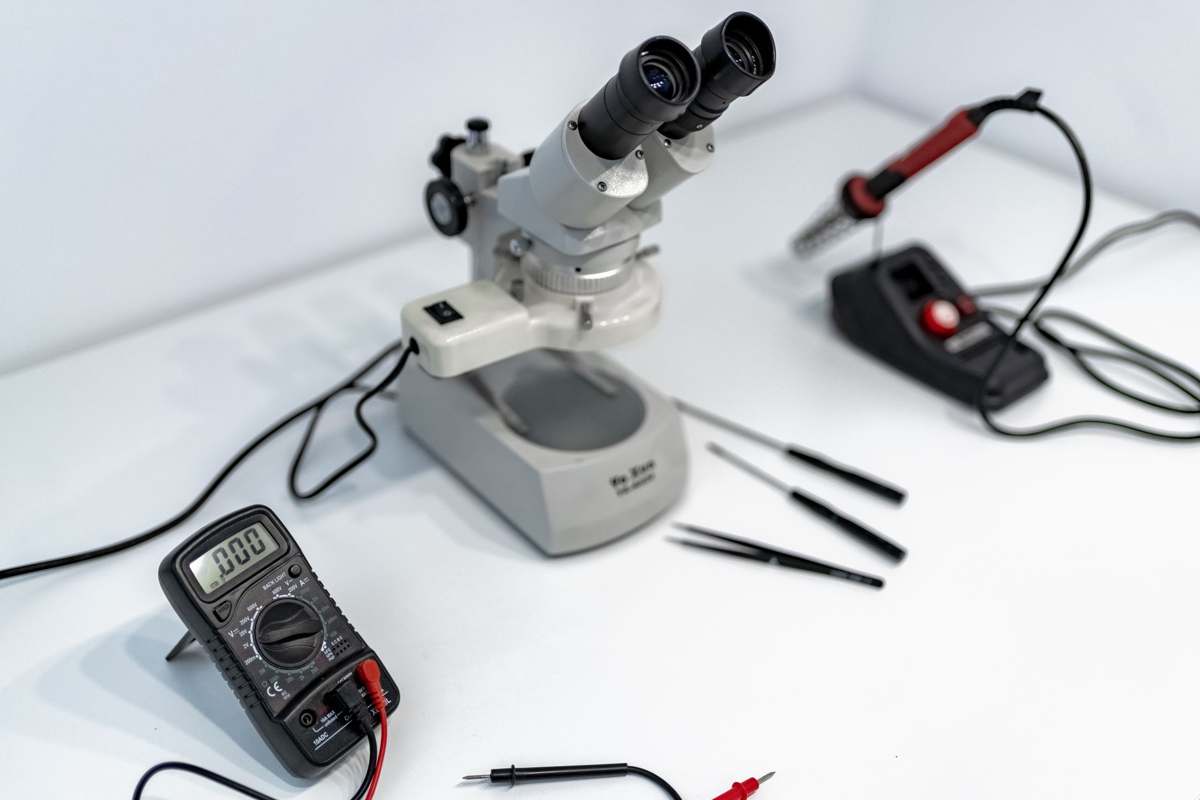
The chemistry that works at bench scale rarely reproduces at commercial scale without a fight.
The Process Makes the Particle. Change It and You Have a New Product.
Nanomaterial manufacturing is where confidence goes to be tested. Synthesis conditions define size distribution and surface state; a scale-up from grams to kilograms can shift both, and the resulting particles are not comparable to the ones your safety data describes. This is the same lesson advanced therapies learned: when the process defines the product, comparability is a strategy, not a formality.
Generic and follow-on complexity compounds it — demonstrating sameness for nanomaterial drug products has repeatedly proven harder than the abbreviated pathways assume. And in Europe, nanomaterial-containing devices get their own attention under MDR, with Rule 19's classification tiers reading engineered nanoparticles as an escalating factor. We build the characterization and comparability package alongside process development, because retrofitting it means re-running the toxicology.

Beautiful in Water, Unknown in Serum.
What a Nano Program Plans Around.
The scale, the screening question, and the fact that outranks all the others.
The range FDA screens on — plus anything above it that still shows dimension-dependent properties.
No nano pathway exists. Existing frameworks apply, with a higher characterization burden and reviewers who read it closely.
Defines the particle. Scale-up without a comparability plan is a new product with old data.
Six Failure Modes We Are Brought In to Prevent.
Nano failures are quiet — they look like data until someone asks how it was measured.
Bulk data cited for the nanoform
Safety history from the macro material offered as precedent — the argument the scale itself refutes.
One sizing method, no orthogonality
A DLS number with nothing to corroborate it — the reviewer’s first question, unanswered.
Characterized as-synthesized
Beautiful data in water, none in serum — the agglomeration state the patient actually receives is unknown.
Scale-up without comparability
Clinical material and commercial material that share a name and little else, discovered at the pre-approval inspection.
Dose in mass only
A toxicology program built on mass when surface area drives the effect — a study that answers the wrong question expensively.
The EU nano rule met late
MDR classification revisited after CE planning began, and a device climbs a class for a material decision made years earlier.

Nanotechnology Regulatory Leadership for Products Without Precedent.
Our leads have built nanomaterial characterization packages, argued dose metrics, and carried comparability through scale-up.

“There is no nano pathway to find. There is only the question of whether your characterization is good enough to make an existing pathway work.”
The discipline we bring to nanoparticle therapeutics, nano-enabled devices, and engineered surfaces.
From the newsroom
The record moves. Follow it.
Regulatory News is our independent newsroom — every story sourced to the primary record, published the day it lands. These are the beats that touch this page. RegulatoryNews.com →
- Devices510(k)s, De Novos, PMAs and EU MDR.
- FDAApprovals, clearances, letters and guidance.
- GuidanceDraft and final guidance, as it lands.
- DrugsPharmaceutical approvals, labels and pathways.
- Key datesDeadlines and comment periods, in one calendar.
- Full archiveEvery story we have published, searchable.
Engineering at the Nanoscale? Characterization Is the Whole Argument.
Bring senior nano regulatory leadership in during process development — before scale-up makes your safety data historical.
Senior-led. Embedded in your team. No junior hand-offs.