Scaffold Plus Cells Equals a Jurisdiction Argument.
Regulatory strategy for tissue-engineered products — where 361 or 351, device or biologic is decided by processing and claims, not by biology.
Free proposal · three minutes
Get your free tissue-engineered product proposal
No sales call. No account. No obligation.
Which markets matter in the next 18 months?
Your Product Is a Material, a Cell, and a Claim. Each One Has Its Own Regulator.
A tissue-engineered product is a scaffold that a device reviewer recognizes, cells that a biologics reviewer recognizes, and a therapeutic claim that decides which of them is in charge. The company sees one product. The regulatory system sees a jurisdictional question that has to be answered before anything else — and the answer is worth years and tens of millions of dollars.
The gravity well is 21 CFR 1271 and the two tests inside it: minimal manipulation and homologous use. Pass both and you are a 361 HCT/P — register the establishment, list the product, follow donor eligibility and GTP. Fail either and you are a 351 biologic needing a BLA, for the same physical object. Companies routinely fail these tests in their marketing copy while filing as tissue, and the enforcement discretion that once cushioned that has ended.
Minimal manipulation and homologous use. Fail either and a registration becomes a BLA.
Four Questions Decide Which Rulebook You Are In.
We run this tree in writing, on the product as designed and as marketed, before anyone commits to a pathway.
Is it minimally manipulated?
Processing that does not alter the tissue’s original relevant characteristics. Cutting and cleaning may qualify. Expanding cells in culture does not.
Fail → 351Is the use homologous?
The product performs the same basic function in the recipient as in the donor. Skin as a covering may qualify; skin as a therapy that stimulates healing does not.
Fail → 351Is it combined with another article?
Adding a scaffold, growth factor, or drug can knock you out of 361 outright — or make you a combination product with a lead-center determination to win.
CombinationBoth tests passed, nothing added?
Establishment registration, product listing, donor eligibility, and Good Tissue Practice. Fast, inexpensive, and narrow — and one marketing claim away from being wrong.
361 HCT/PThe scaffold has its own file regardless. Whichever way jurisdiction lands, a degradable matrix owes a degradation-product story: what appears, when, where it goes, and what the tissue does about it — ISO 10993 chemistry underneath a biological claim. We build that in parallel with the jurisdiction argument, because both are load-bearing.
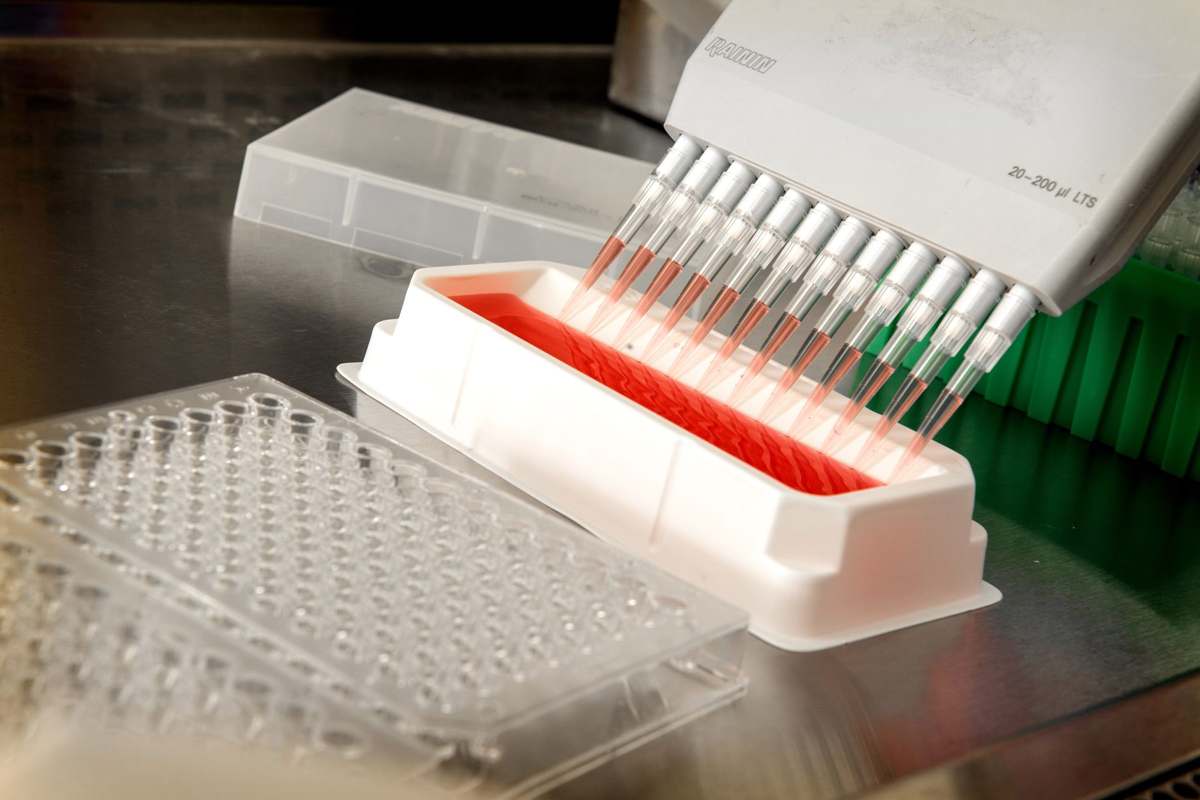
How do you assay a product whose function is to become tissue?
How Do You Write a Specification for Something Designed to Disappear?
Tissue-engineered products are meant to remodel — the scaffold resorbs, host cells migrate in, and the thing you implanted becomes something you did not manufacture. That is the therapeutic goal and an analytical nightmare: potency assays for a structural-biological hybrid, stability for a living construct with a shelf life measured in days, and release testing on a product whose function only exists in vivo.
Europe adds its own frame — ATMP classification with tissue-engineered products as a defined class, a centralized route, and its own committee. We build the analytics and the jurisdiction argument together, because a product that cannot be specified cannot be filed, whichever center is reviewing it.
Minimal Manipulation and Homologous Use Separate a Registration From a Decade.
21 CFR 1271’s two-part test, the 361-versus-351 determination that turns on processing and claims, and the enforcement-discretion cushion that has now expired — the classification is the program.
What a Tissue-Engineered Program Plans Around.
Three determinations, all made early, all expensive to reverse.
- 1271
- The regulation with the two tests — minimal manipulation and homologous use — that separate a registration from a BLA.
- 361 or 351
- The determination that decides whether your program is a filing or a decade. It turns on processing and claims.
- Expired
- The enforcement discretion period that once cushioned aggressive 361 filings. Claims and filing status now have to agree.
Six Failure Modes We Are Brought In to Prevent.
In this category, the marketing department frequently writes the regulatory strategy without knowing it.
note_manip
Non-homologous claims on a 361 filing
Tissue marketed as stimulating regeneration while registered as a covering — the mismatch that ended enforcement discretion.
note_homolog
Culture expansion, 361 assumed
Cells expanded in culture and still filed as minimally manipulated — a determination that does not survive contact with the agency.
note_claims
Scaffold added, jurisdiction unchanged
A matrix or growth factor introduced without re-running the analysis — a combination product filed as tissue.
note_donor
No potency assay for a structure
A product whose function is architectural, with no release test that measures anything about it.
note_combo
Degradation products uncharacterized
A resorbable scaffold with no story for what it becomes — the question a reviewer always asks.
note_scale
Donor eligibility as paperwork
GTP treated as an administrative layer rather than the safety system a 361 registration rests on.
Tissue-Engineering Leadership That Starts With Jurisdiction.
Our leads have made 361/351 determinations that held, filed the BLAs when they did not, and built the scaffold and potency files underneath.

“Your pathway is decided by your process and your marketing claim — usually before anyone in regulatory is asked. Settle it in writing, early, or it gets settled for you.”
The discipline we bring to scaffolds, engineered grafts, and cell-scaffold constructs.
From the newsroom
The record moves. Follow it.
Regulatory News is our independent newsroom — every story sourced to the primary record, published the day it lands. These are the beats that touch this page. RegulatoryNews.com →
- Advanced therapiesCell and gene therapy approvals and designations.
- FDAApprovals, clearances, letters and guidance.
- GuidanceDraft and final guidance, as it lands.
- Devices510(k)s, De Novos, PMAs and EU MDR.
- Regulator registerThe 36 authorities the newsroom tracks.
- Full archiveEvery story we have published, searchable.
Building a Tissue-Engineered Product? Answer 361 or 351 First.
Bring senior leadership in before the claim, the process, and the filing status disagree with each other.
Senior-led. Embedded in your team. No junior hand-offs.