Proving Two Creams Are the Same Is Harder Than Proving Two Tablets Are.
Regulatory strategy for topical and transdermal products — where bioequivalence has to be designed, not measured, because the blood tells you nothing.

Free proposal · three minutes
Get your free topical and transdermal proposal
No sales call. No account. No obligation.
Which markets matter in the next 18 months?
The Drug Is Working in the Skin. Your Blood Samples Are Looking Somewhere Else.
For an oral tablet, plasma concentration is a reasonable proxy for what the drug is doing. For a locally acting topical, it is close to irrelevant: the drug’s job is in the epidermis, and the amount that reaches the blood is a rounding error — often below detection. The measurement everyone else relies on simply is not available.
That single fact makes this category disproportionately hard. Generic topicals have historically required clinical endpoint studies — large, insensitive, expensive trials that answer the question badly. The modern alternative is a weight-of-evidence approach: Q1/Q2 sameness, Q3 microstructure comparison, and in vitro release and permeation data assembled into an argument. It is cheaper and far more sensitive, and it has to be planned from the start.
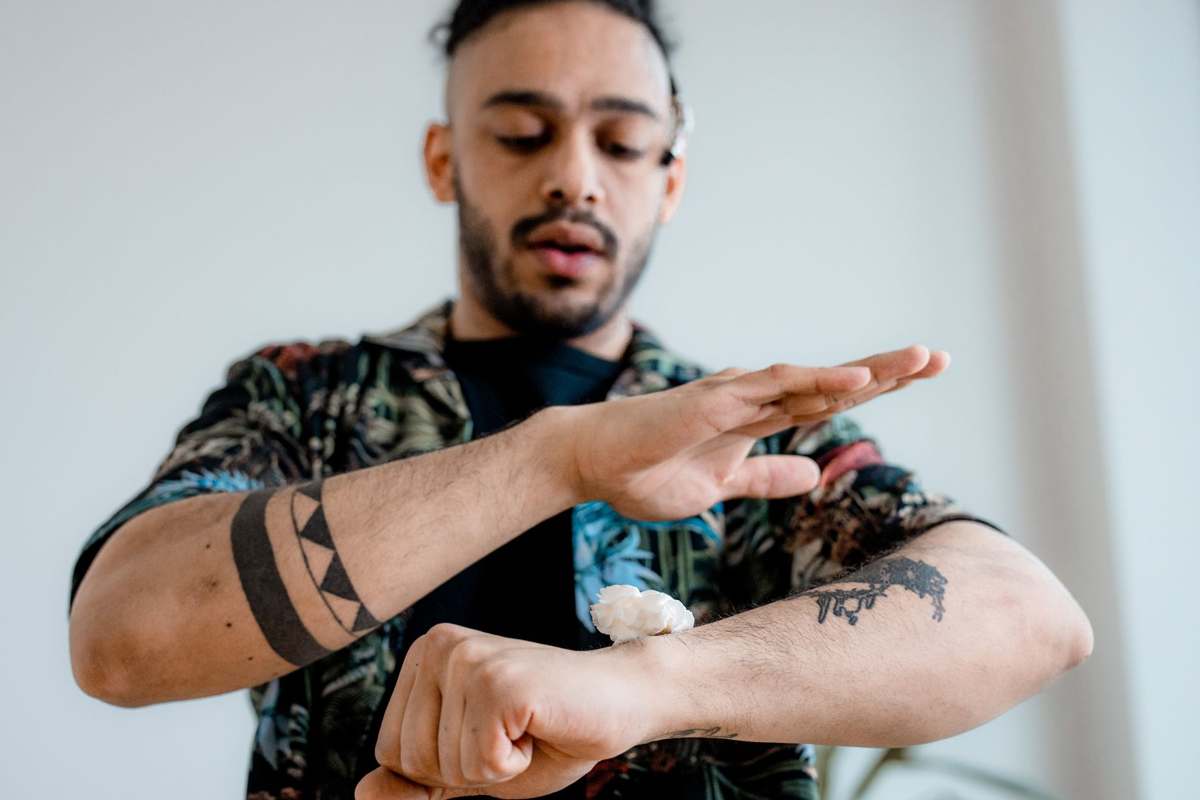
Q1 components. Q2 amounts. Q3 arrangement — the one that decides whether the argument works.
One Question Splits This Category in Half.
Is the drug meant to stay in the skin, or pass through it? Everything — endpoints, testing, risk, even the recall history — follows from the answer.
Locally Acting Topicals
Creams, gels, ointments treating the tissue they sit on. Systemic exposure is an impurity, not a measure.
- How you prove it
- IVRT and IVPT — release and permeation through excised skin — plus Q1/Q2/Q3 sameness. A characterization argument, not a clinical one.
- Where it breaks
- Q3 microstructure: globule size, phase distribution, rheology. Two products with identical ingredients can behave completely differently.
- The trap
- Assuming a clinical endpoint study is the safe route. It is the expensive, insensitive route.
Transdermal Systems
Patches using skin as a route to systemic circulation — a controlled-release device made of adhesive.
- How you prove it
- Conventional PK bioequivalence works here, because the plasma level is the point.
- Where it breaks
- Adhesion. A patch that lifts is a dose that stopped. Adhesion and irritation/sensitization studies are their own regulatory workstream.
- The trap
- Residual drug and abuse potential — a used patch containing most of its payload is a public safety problem with a recall history behind it.
Both arms share one hazard: the skin is not a standard membrane. Age, site, hydration, disease state, and race all change permeation, and your in vitro model is excised tissue from donors who are not your patients. We design the sameness and permeation package around that variability rather than hoping it averages out.
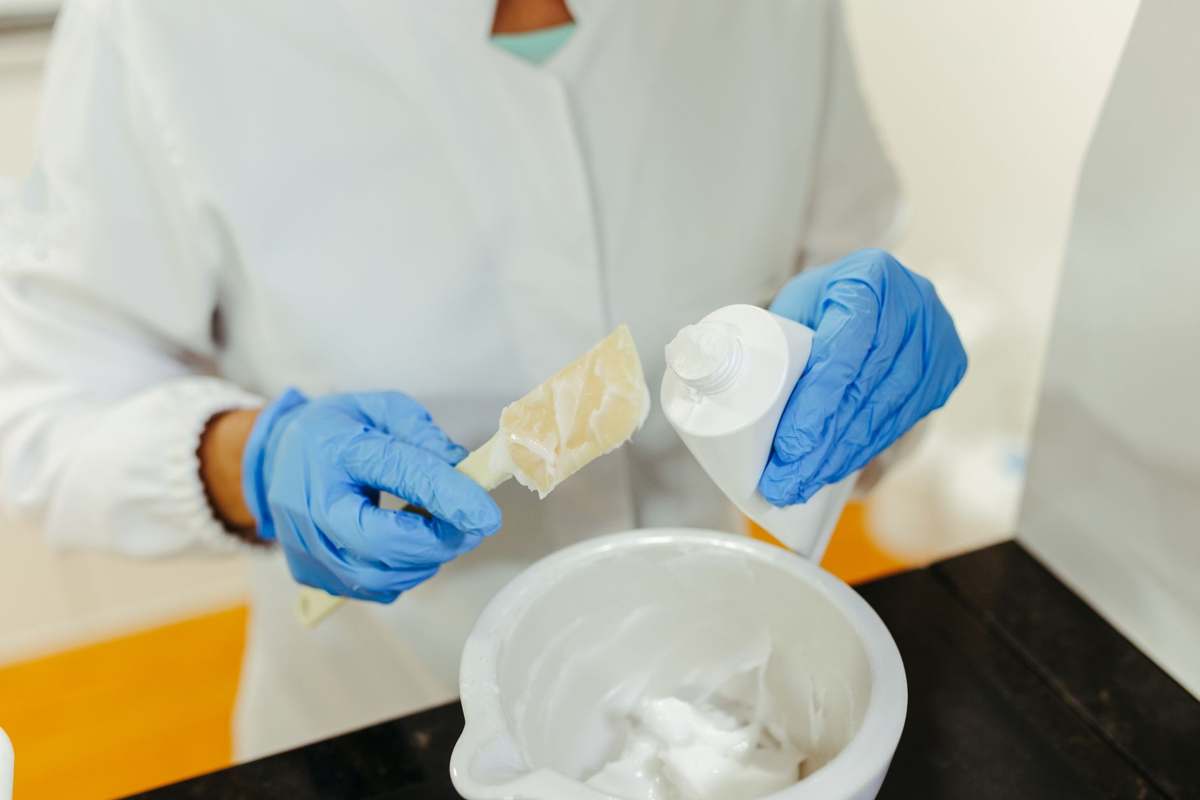
Same ingredients, different process, different medicine. Q3 is where that shows up.
Identical Ingredients, Different Mixer, Different Drug.
Semisolid formulations are structured systems. The same components at the same concentrations, processed with different shear or a different cooling profile, produce a different globule size distribution and a different rheology — and therefore a different release rate. That is what Q3 sameness captures, and it is why a topical’s manufacturing process belongs in its regulatory strategy rather than downstream of it.
The corollary is that scale-up and site transfer are riskier here than the category’s reputation suggests. We build the IVRT method early and use it as the control — the method that tells you whether a process change moved the product, before a regulator or a patient does.
Same Ingredients Isn’t Sameness. Arrangement Is Where Topicals Are Won.
Q1/Q2/Q3 sameness, in vitro permeation as the sensitive alternative to a clinical endpoint study, and adhesion as a dose-delivery attribute — a patch that lifts is a dose that stopped.
What a Topical Program Plans Around.
Three things the plasma concentration will never tell you.
Same components, same amounts, same arrangement. The third one is where topical bioequivalence is won or lost.
In vitro permeation through excised skin — the sensitive alternative to a clinical endpoint study nobody wants to run.
For transdermals, a dose-delivery attribute with its own studies. A patch that lifts is a dose that stopped.
Six Failure Modes We Are Brought In to Prevent.
This category punishes anyone who treats it as a simpler oral solid.
note_q3
Clinical endpoint study by default
An expensive, insensitive trial run because nobody built the in vitro package that would have replaced it.
note_ivpt
Q3 never characterized
Q1/Q2 sameness claimed, microstructure ignored — and an IVRT profile that does not match the reference.
note_adhesion
IVPT donors unlike the patients
Permeation data from skin that does not represent the intended-use population, questioned in review.
note_endpoint
Adhesion discovered in the field
A patch that performs on the bench and lifts on real skin, in heat, on day two.
note_micro
Residual drug unaddressed
A used patch with most of its payload intact, and no disposal or abuse-deterrence position.
note_wear
Process change without an IVRT control
Scale-up that alters rheology, with no method sensitive enough to have caught it.
Topical Leadership That Can Prove Sameness Without a Clinical Trial.
Our leads have built IVRT/IVPT packages, defended Q3 sameness, and taken transdermal systems through adhesion and irritation programs.


“In topicals, the blood tells you nothing. If you cannot build the in vitro argument, you will run the clinical study — and it will answer the question worse.”
The discipline we bring to creams, gels, ointments, and transdermal systems.
From the newsroom
The record moves. Follow it.
Regulatory News is our independent newsroom — every story sourced to the primary record, published the day it lands. These are the beats that touch this page. RegulatoryNews.com →
Developing a Topical? Build the In Vitro Case Before the Clinical One.
Bring senior leadership in while the formulation and the IVRT method can still be designed together.
Senior-led. Embedded in your team. No junior hand-offs.