The Alarm That Nobody Hears Is the One in Your Risk File.
Regulatory strategy for bedside, central-station, and ambulatory monitoring — where alarm design under IEC 60601-1-8 is the discipline that carries the submission.
Free proposal · three minutes
Get your free patient monitoring proposal
No sales call. No account. No obligation.
Which markets matter in the next 18 months?
A Monitor That Alarms Too Often Is as Dangerous as One That Doesn’t Alarm at All.
Alarm fatigue is not a usability complaint — it is the category’s defining safety hazard, and it is well documented as a contributor to patient deaths. Units generate alarms in volumes that guarantee clinicians will tune them out, silence them, or lower their limits, and every one of those adaptations is a rational response to a design that cried wolf. Your true alarm arrives into a room that has learned not to listen.
That makes monitoring uniquely uncomfortable for engineers: sensitivity is not free. Every increase in detection generates false alarms that degrade the whole system’s responsiveness — so the design target is not maximum sensitivity but the alarm burden a real ward can sustain. We treat alarm design as the primary risk control it is, with the clinical workflow inside the analysis rather than beside it.

Alarm fatigue is a designed-in hazard. It arrives one nuisance alarm at a time.
Four Questions Every Alarm Has to Answer.
IEC 60601-1-8 gives the grammar — priorities, signals, and states. These are the questions we run every monitoring file against, alarm by alarm.
What priority is it, and why?
High, medium, and low map to onset and severity of harm — and the standard prescribes how each one looks and sounds. Priority inflation is the original sin: when everything is high priority, nothing is.
Who is meant to hear it, and where are they?
Bedside, central station, pager, phone. Every hop adds latency and a failure mode, and a distributed alarm system inherits obligations most vendors discover during an incident review rather than during design.
What happens when it is ignored?
Silence, pause, off, and escalation behaviors have to be designed, labeled, and defensible — because the clinician will silence it. The question is whether your design anticipated that or was surprised by it.
What is the false-alarm burden per bed, per shift?
The single most predictive metric for whether your monitor helps or harms — and the one most submissions never state. If you have not measured it in a realistic setting, the ward will measure it for you.
Then the technical alarm question: a lead falls off, a sensor detaches, a network link drops. Technical alarms are where monitoring quietly fails — a disconnected patient looks exactly like a stable one unless the system insists otherwise, loudly.

Arrhythmia detection is a diagnostic claim living inside a hardware product.
You Are Not Selling a Monitor. You Are Selling an Alarm Chain.
Modern monitoring is a distributed system: sensors at the bedside, a network you do not own, a central station, middleware, and a phone in a nurse’s pocket. The clinical claim implicates the whole chain, but the components come from four vendors and the hospital integrates them. Deciding where your device ends — and saying so in the file — is the scope decision the submission turns on.
Inside the box, the algorithms are doing more every year: arrhythmia classification, early-warning scores, deterioration indices. Each is a diagnostic claim wearing hardware, with the software framework, the change-control question, and increasingly the AI change-plan question attached. We scope the chain and the algorithms together — and hold cybersecurity to the same line, because a monitor is a cyber device on a hospital network.
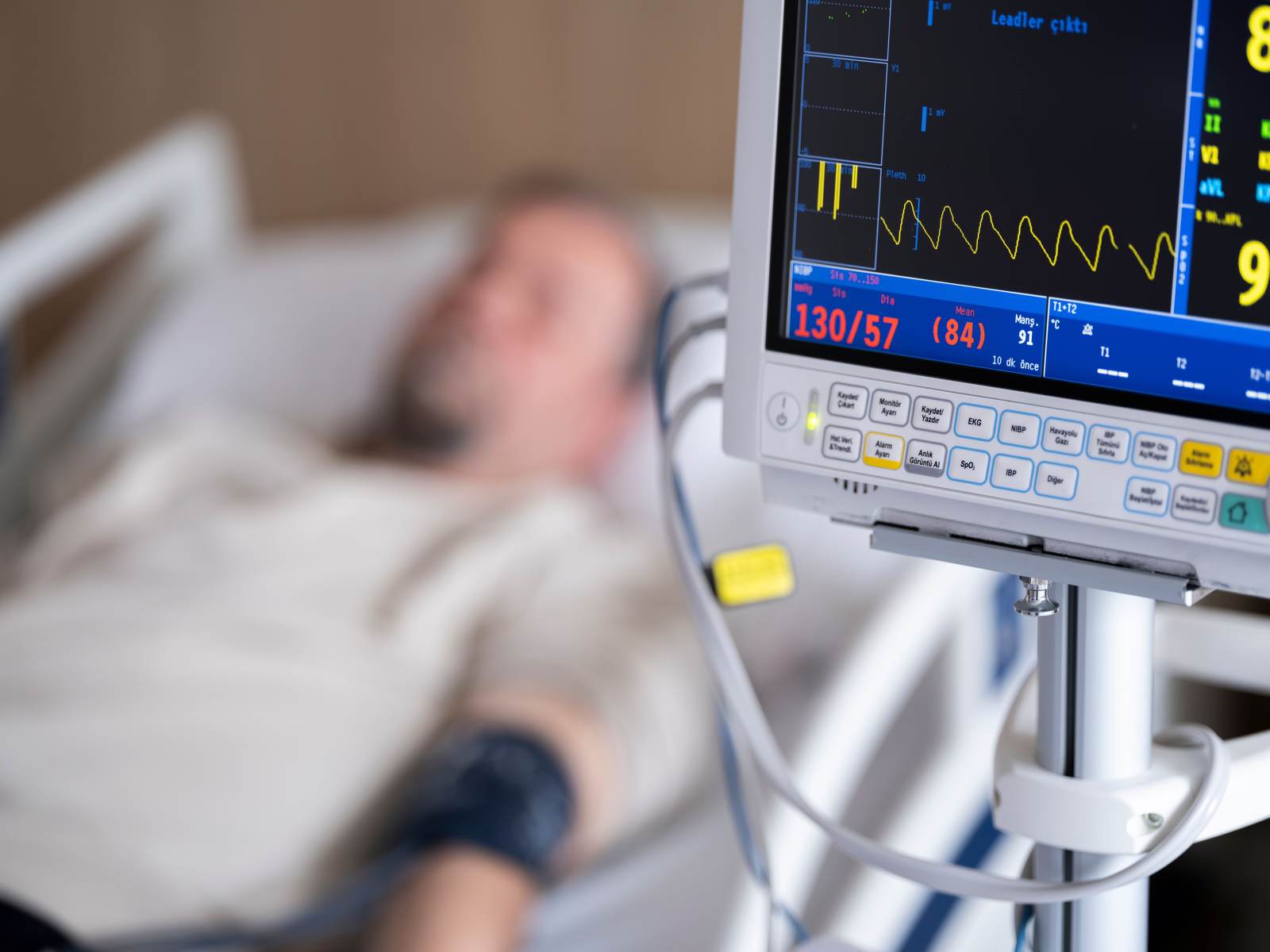
A Monitor That Cries Wolf Is a Safety Hazard, Not a Nuisance.
The alarm system standard, alarm fatigue, and the unbroken chain from sensor to responding clinician are the whole discipline — a missed alarm and a false one are both design failures.
What a Monitoring Program Plans Around.
Three constants in a category whose product is attention.
The alarm standard — priorities, signals, and states, prescribed down to the tone. It is the category’s spine.
A documented contributor to patient deaths, and the reason sensitivity is a trade-off rather than a goal.
Bedside to pocket. Your claim implicates every hop, including the ones you did not build.
Six Failure Modes We Are Brought In to Prevent.
Monitoring failures are rarely dramatic. They are a design that assumed someone was listening.
Priority inflation
Every alarm designed as high priority, guaranteeing the ward silences them all — and the file says nothing about it.
False-alarm rate never measured
Sensitivity optimized in a lab, alarm burden discovered at the bedside by nurses who then lower the limits.
Escalation over infrastructure you don’t own
Secondary notification through hospital middleware and phones, with no analysis of what a dropped hop costs.
Technical alarms treated as minor
A detached lead handled as a nuisance rather than the “this patient is unmonitored” event it actually is.
Algorithms without a software file
Arrhythmia and early-warning logic evolving release to release with no change-control position.
Fleet security as an afterthought
Monitors on the clinical network with no patch path — a 524B-era exposure across an installed base.

Monitoring Regulatory Leadership That Has Stood at the Nurses’ Station.
Our monitoring leads have run alarm risk analyses, defended detection algorithms, and scoped distributed systems for review.

“Ask a monitoring team for their false-alarm rate per bed per shift. If they don’t have it, they don’t yet know whether their device helps.”
The discipline we bring to bedside, central-station, and ambulatory monitoring.
From the newsroom
The record moves. Follow it.
Regulatory News is our independent newsroom — every story sourced to the primary record, published the day it lands. These are the beats that touch this page. RegulatoryNews.com →
- Healthcare technologySaMD, AI-enabled devices and digital health.
- FDAApprovals, clearances, letters and guidance.
- GuidanceDraft and final guidance, as it lands.
- Devices510(k)s, De Novos, PMAs and EU MDR.
- ClinicalTrials, INDs, holds and study design.
- Full archiveEvery story we have published, searchable.
Building a Monitor? Design the Alarm Before the Algorithm.
Bring senior monitoring regulatory leadership in while the alarm strategy is still a design choice, not a complaint trend.
Senior-led. Embedded in your team. No junior hand-offs.