A Court Just Handed This Category Back Its Old Rules.
Regulatory strategy for molecular diagnostics — PCR and NGS validity, the vacated LDT rule, and the CLIA-or-FDA decision that shapes your whole business.

Free proposal · three minutes
Get your free molecular diagnostic proposal
No sales call. No account. No obligation.
Which markets matter in the next 18 months?
Your Assay Can Find a Single Molecule. That Is the Problem.
Amplification chemistry is extraordinary — it will find your target at vanishing concentrations. It will also find the amplicon from last week’s run that aerosolized in your lab, and it will call it a patient result. Contamination control in a molecular laboratory is not housekeeping; it is the difference between a diagnostic and a random number generator with a good limit of detection.
Sequencing adds a second layer: the assay is wet chemistry plus a bioinformatics pipeline, and the pipeline is as much your device as the reagents are. Alignment, variant calling, filtering thresholds, and the reference database all shape the result. Change a pipeline version and you have changed the test — which is a validation event that many labs still process as an IT update.
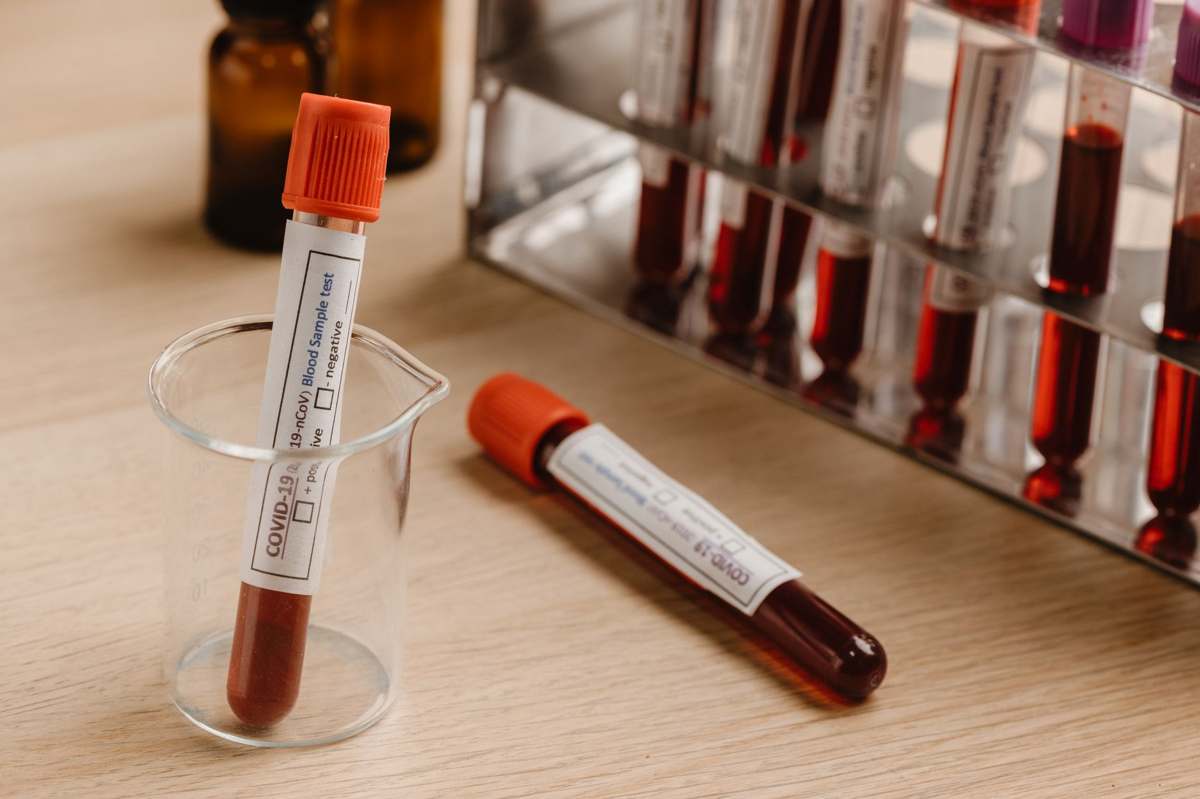
The most sensitive assay in the lab will happily amplify yesterday’s run.
The Rule That Was Going to Change Everything, and Then Didn’t.
If you built a strategy around the 2024 LDT rule, the ground moved twice. Here is exactly where it settled — and why that is a strategic question rather than a relief.
FDA finalizes the LDT rule
The agency amends its regulations to make clear that IVDs include tests made by laboratories, with a phase-out of general enforcement discretion — bringing LDTs into the device framework in stages.
A federal court vacates it entirely
The Eastern District of Texas, in the consolidated ACLA and AMP cases, holds that FDA lacks statutory authority — reasoning that LDTs are medical services, not devices — and vacates the rule in its entirety.
HHS does not appeal
No appeal is filed. The vacatur stands, and the legal challenge effectively concludes.
FDA formally rescinds the regulation
The agency issues a final rule reverting the text to its pre-2024 form, removing the language that captured laboratories — restoring the status quo of enforcement discretion.
Enforcement discretion is back — and that is a choice to make, not a problem solved. CLIA still governs your laboratory, New York State still reviews tests, payers still ask for evidence, and FDA retains authority it has simply chosen not to exercise here. The LDT route is available again; whether it is right for your test now depends on your claim, your market, and your appetite for a policy that has moved twice in two years.

Change the variant caller and you changed the test. That is a validation, not a deployment.
You Cannot Clinically Validate Five Hundred Variants One at a Time.
A large NGS panel reports hundreds of variants, most of them rare, many of uncertain significance. Classical validation — clinical performance for each claim, in the intended population — is arithmetically impossible: you will never assemble enough patients carrying each variant. This is why representative-variant approaches and well-curated databases matter, and why panel design is a regulatory decision rather than a menu.
Then variant reclassification: a variant of uncertain significance becomes pathogenic two years after you reported it to a patient. That is a post-market obligation most labs have no process for. We build panel validation strategies, pipeline change control, and reclassification workflows together — because they are one system pretending to be three.

The LDT Rule Was Vacated. The Discipline It Demanded Did Not Go Away.
Enforcement discretion is back after the 2024 rule was struck down — but your bioinformatics pipeline is still a device, and a variant’s meaning can change after you have reported it.
What a Molecular Program Plans Around.
Three facts, one of them brand new.
The 2024 LDT rule — struck down in March 2025, unappealed, and formally rescinded in September 2025. Enforcement discretion is back.
Your bioinformatics is part of your device. Version changes are validation events, not deployments.
Variants change meaning after you have reported them. The obligation to notice is yours.
Six Failure Modes We Are Brought In to Prevent.
The chemistry is usually fine. The system around it is where the risk sits.
note_ldt
Strategy still built on the vacated rule
A roadmap, a budget, or a diligence story assuming a regulation that no longer exists — in either direction.
note_pipeline
Pipeline changes outside change control
A variant caller updated by the bioinformatics team, with no revalidation and no record of which version produced which report.
note_reclass
Amplicon contamination architecture
Unidirectional workflow treated as a suggestion — and a run of false positives nobody can explain.
note_wetlab
Panels validated variant by variant
A validation plan that cannot finish, because the arithmetic of rare variants was never confronted.
note_ref
No reclassification process
VUS-to-pathogenic reclassifications with no mechanism to identify affected patients or notify clinicians.
note_report
LDT route assumed to be free
Enforcement discretion mistaken for absence of oversight — CLIA, New York State, and payers all still have opinions.

Molecular Leadership for a Category the Courts Just Rewrote.
Our molecular leads have validated NGS panels, built pipeline change control, and re-planned strategies through the LDT reversal.


“The LDT rule was final, then vacated, then rescinded — in eighteen months. Any strategy that depends on the policy holding still is not a strategy.”
The discipline we bring to PCR, NGS panels, and laboratory-developed tests.
From the newsroom
The record moves. Follow it.
Regulatory News is our independent newsroom — every story sourced to the primary record, published the day it lands. These are the beats that touch this page. RegulatoryNews.com →
Running a Molecular Test? Re-Examine the Route Now That the Rule Is Gone.
Bring senior molecular leadership in to decide LDT or FDA deliberately — not by default.
Senior-led. Embedded in your team. No junior hand-offs.