Your Clearance Stands on a Predicate. Choose It Like It Matters.
510(k) clearance strategy led by people who have argued substantial equivalence to FDA — predicate selection, testing plans, and submissions built to survive review, not just to get filed.


Free proposal · three minutes
Get your free 510(k) proposal
No sales call. No account. No obligation.
Start my free proposalA 510(k) Is Not an Approval. It Is an Argument.
A 510(k) premarket notification asks FDA to agree that your device is substantially equivalent to one already legally on the market — same intended use, and either the same technology or differences that raise no new questions of safety and effectiveness. Most Class II devices reach the US market this way.
That makes the predicate the single most consequential decision in the program. Choose it on intended use and technological characteristics and the rest of the submission falls into line. Choose it on marketing features — the mistake we are most often hired after — and every test report, every comparison table, and every review question inherits the mismatch. The legal test is narrower than "closest device", and it is worth getting right before you file.

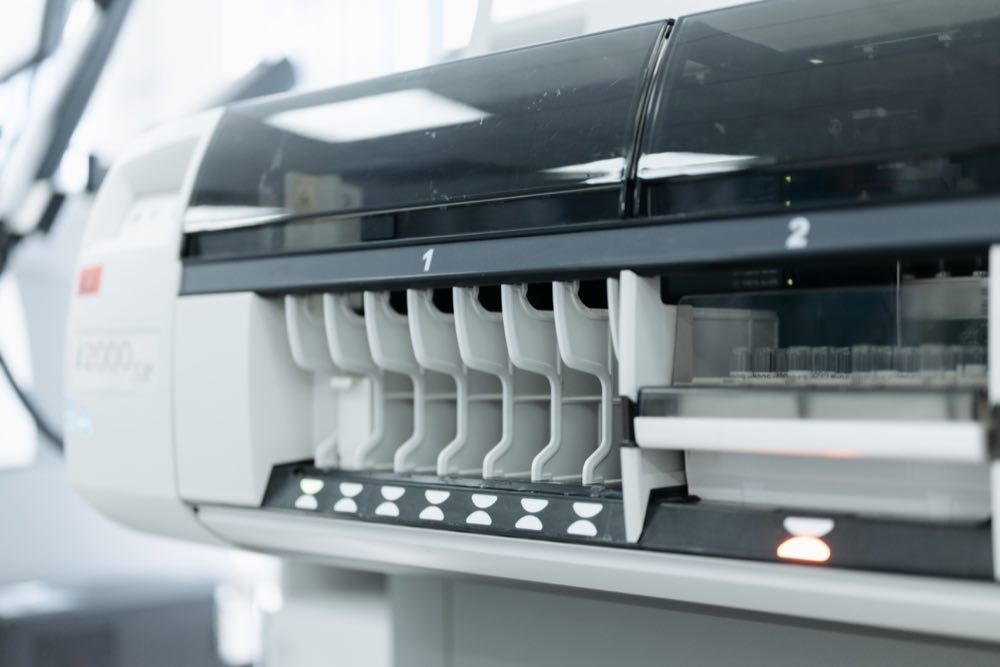
Performance testing against recognized consensus standards is what carries the comparison table — the argument is only as strong as the bench behind it.
Four Questions Decide Substantial Equivalence.
FDA’s 510(k) decision flow is public and mechanical. We build the submission to answer each rung before it is asked.
Is the predicate legally marketed?
A cleared, preamendments, or reclassified device that has not been withdrawn for safety reasons. Chains of predicates get scrutinized — a weak link is a review question.
Is the intended use the same?
Judged from your proposed labeling against the predicate’s. Indication wording is engineering here, not copywriting — one clause can move you off the pathway.
Same technological characteristics?
Materials, design, energy source, principle of operation. Same answers close the question; different answers open the fourth rung.
Do the differences raise new questions of safety or effectiveness?
The rung where 510(k)s are won and lost. The answer is built from bench, biocompatibility, software, and — when the science demands it — clinical performance data.
Three Flavors of the Same Statute. Picking Wrong Costs a Conversion.
Each answers the same legal question with different evidence. FDA has published exactly where the lines sit — we make the call early, in writing, against the guidance.
 Traditional
The Full Comparison
The default route: complete performance testing, a full comparison table, and every difference from the predicate argued on data. Everything that doesn’t fit the other two lands here.
 Special
Your Own Change, Cleared Fast
A change to your own cleared device, cleared on the strength of your design-control process rather than fresh comparison data. Fast when it fits — and converted to Traditional when it doesn’t.
 Abbreviated
Leaning on the Standards
Built on declarations of conformity to FDA-recognized consensus standards and special controls — less data to assemble where a standard already speaks to the question.
Six Disciplines That Carry a 510(k).
From the predicate decision to the change discipline that protects the clearance after you ship.
Predicate & Pathway Strategy
Predicate selection argued on intended use and technology — and the honest early call when the right answer is De Novo, Special 510(k), or an Abbreviated route instead.
Q-Submission Positioning
When the predicate or the testing plan is genuinely arguable, a Pre-Sub that asks FDA answerable questions — before you have spent the testing budget.
Test Plan Architecture
A performance-testing matrix built from FDA-recognized consensus standards and device-specific guidance, sized to the differences your predicate comparison actually opens.
Submission Build
The 510(k) assembled in eSTAR — mandatory for electronic submissions since October 2023 — with a comparison table that reads like the reviewer’s checklist, because it is.
Review Management
Refuse-to-Accept screening survived on day one, and Additional Information requests answered inside the window with data, not argument.
Post-Clearance Change Discipline
The documented letter-to-file versus new-510(k) decision for every design change — so version three does not quietly step outside the clearance version one earned.
Three Clocks Every 510(k) Lives On.
None of them start when you think, and all of them stop while FDA waits on you.
The Refuse-to-Accept screen. An administrative checklist, failed for administrative reasons — and the fastest way to lose a month before review even begins.
The MDUFA review goal for a Traditional 510(k) — FDA days, which pause the moment an Additional Information request issues and restart when you answer it.
Your window to answer an AI request before the submission is withdrawn — the quiet deadline that turns a fixable deficiency into a refile.
Six Failure Modes We Are Brought In to Prevent.
Every one of them is cheaper to prevent than to litigate with a review division.

A predicate picked on features
Equivalence argued on what the device does rather than its intended use and technology — the mismatch surfaces as an NSE risk at full price, mid-review.
Testing to the wrong edition
Bench work run against a superseded standard, discovered when the reviewer cites the recognized edition — and the retest costs the launch quarter.
Indication wording that outruns the predicate
Labeling drafted by marketing that quietly claims a new intended use — one clause, and the entire equivalence argument is void.
The RTA stumble
A strong submission refused at screening for a missing form field or an unsigned declaration — administrative failure, real calendar cost.
AI responses written as advocacy
Deficiency letters answered with argument instead of data. The clock was paused on your side of the table — and restarts no closer to clearance.
Changes that outgrew the clearance
Post-market design changes filed to memory instead of to file — until an inspector reads the current device against the cleared one and asks for the missing 510(k)s.
510(k) Leadership That Has Sat Across From the Review Division.
Our device leads have picked predicates, built test matrices, and answered deficiency letters across surgical, monitoring, imaging, and software devices.
“The comparison table is the submission. Everything else in the file exists to make one row of that table true.”
The discipline we bring to every premarket notification.
From the newsroom
The record moves. Follow it.
Regulatory News is our independent newsroom — every story sourced to the primary record, published the day it lands. These are the beats that touch this page. RegulatoryNews.com →
- Devices510(k)s, De Novos, PMAs and EU MDR.
- FDAApprovals, clearances, letters and guidance.
- GuidanceDraft and final guidance, as it lands.
- DrugsPharmaceutical approvals, labels and pathways.
- Key datesDeadlines and comment periods, in one calendar.
- Full archiveEvery story we have published, searchable.
Have a Predicate in Mind? Pressure-Test It Before FDA Does.
A senior device lead can tell you in one working session whether your equivalence argument holds — and what it will take to make it hold.
Senior-led. Embedded in your team. No junior hand-offs.