One Identity for Every Device — On the Label and in FDA’s Database.
Unique Device Identification and the GUDID submission — a machine-readable identity on every label and a matching record FDA and the world can read, kept in step with your labeling and change control.

Free proposal · three minutes
Get your free UDI and GUDID proposal
No sales call. No account. No obligation.
Which markets matter in the next 18 months?
A UDI Answers Two Questions: What Is It, and Which One Is This?
Every UDI is built from two parts that do different jobs. Confusing them — or filing one where the other belongs — is the root of most UDI trouble.
The Static Half
Fixed. One per device version or model.
The DI identifies the specific version or model and the labeler that makes it. It never changes for that product, and it is the key that links the physical label to the GUDID record.
- Mandatory on every UDI-labeled device
- Submitted to GUDID — the DI record is what you file
- Issued under an FDA-accredited issuing agency’s system
The Variable Half
Conditional. Changes with each production run.
The PI carries the production-specific data — lot or batch, serial number, expiration or manufacturing date — when the device’s labeling includes it. It moves with the unit, not the model.
- Included when the label bears that production data
- Not submitted to GUDID — it lives on the label, not the record
- Drives traceability — recalls and complaints resolve to the PI
GUDID Is the Mirror. It Only Helps if It Matches the Label.
The Global Unique Device Identification Database holds the DI record for every UDI-labeled device — the device’s attributes, in a form the whole health system can query. That public record is only useful when it is a faithful mirror of the physical label. A GUDID attribute that disagrees with what’s printed on the box is not a small data error — it is a labeling discrepancy with a database to prove it.
Which is why UDI is really a labeling-and-data discipline, not an IT project. The DI on the label, the GUDID record, your device listing, and your labeling all describe the same device, and every change has to move through all of them together.
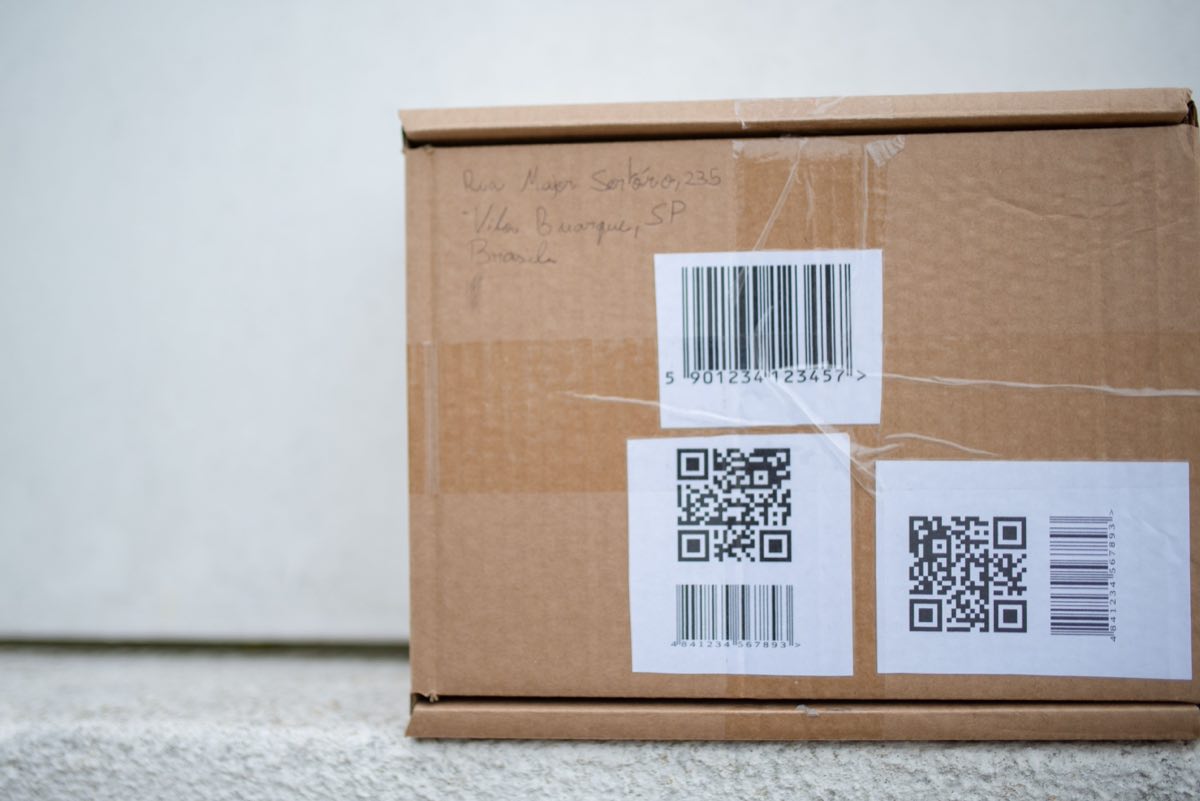
Whatever prints on the label has to equal what sits in GUDID — the mirror only works when both faces agree.
On the Label
The UDI in both plain text and a scannable AIDC form, on the label and package — readable by a human and a scanner alike.
On the Device
Direct marking on the device itself where it is intended for repeated use and reprocessing — the identity survives the label.
In GUDID
The DI record and its attributes submitted to FDA’s database — the queryable mirror of what the label declares.
Six Disciplines That Keep UDI True.
From the first issuing-agency decision to the change that has to ripple through label and database together.
Issuing-Agency & Numbering Strategy
The choice of FDA-accredited issuing agency and a DI numbering scheme that fits your catalog — the decision every later record inherits.
Label & AIDC Formatting
The UDI carried in plain text and a scannable form on label and package, formatted so it reads cleanly on the line and at the point of care.
GUDID Submission & Data Quality
DI records built and submitted to GUDID with attributes that match the label exactly — the data-quality work that keeps the mirror honest.
Direct-Marking Strategy
Where reusable devices must carry the UDI on the device itself, a marking approach that survives reprocessing without compromising the device — including a documented basis for any 21 CFR 801.45 exception you rely on.
Compliance-Date Mapping
Your portfolio mapped to the phased UDI requirements by class, so nothing ships past a date it should have met — and nothing is gold-plated early without reason.
Change-Synchronized Updates
Label changes, GUDID updates, and listing edits wired to fire together — so a single catalog change never leaves the three records disagreeing.
Europe runs its own UDI under EUDAMED — the same device, a second database, a different Basic UDI-DI to reconcile.
UDI Isn’t Only FDA’s Anymore. Europe Wants Its Own.
The EU MDR and IVDR built their own UDI system, submitted into EUDAMED, with a Basic UDI-DI concept that has no exact FDA equivalent. A device sold on both sides of the Atlantic now carries two UDI obligations that overlap but do not match — and reconciling them is a strategy question, not a data-entry one.
We design the identity once, for both systems, so the DI scheme, the label, and the two databases stay coherent as the product and the regulations evolve. Done well, UDI stops being a recurring fire drill and becomes the traceability backbone it was meant to be.
Six Failure Modes We Are Brought In to Prevent.
Almost all of them are the label and the record quietly disagreeing.

GUDID that drifts from the label
An attribute updated on the box but not in the database — or the reverse. The mirror stops mirroring, and the discrepancy is now documented.
PI data filed into GUDID
Production data that belongs on the label pushed into the DI record — a category confusion that corrupts the database entry.
A DI scheme that can’t scale
A numbering approach chosen for the first product that breaks on the fiftieth variant — and a re-issuance no one wanted.
Missed direct marking
A reusable, reprocessed device whose UDI lives only on a label that doesn’t survive the autoclave — the identity gone when it’s needed most.
A missed compliance date
A class of devices shipped past its phased UDI deadline because the portfolio was never mapped to the schedule.
US and EU treated as one
A single UDI approach assumed to satisfy both FDA and EUDAMED — until the Basic UDI-DI and the two databases refuse to reconcile.
UDI as a Labeling-and-Data Discipline, Not an IT Ticket.
Our leads have built DI schemes, run GUDID and EUDAMED submissions, and kept label and database in lockstep through catalog change.
“UDI is two statements about one device that have to stay identical — the one on the label and the one in the database. Keeping them identical is the entire job.”
The discipline we bring to device identity.
From the newsroom
The record moves. Follow it.
Regulatory News is our independent newsroom — every story sourced to the primary record, published the day it lands. These are the beats that touch this page. RegulatoryNews.com →
- Devices510(k)s, De Novos, PMAs and EU MDR.
- FDAApprovals, clearances, letters and guidance.
- GuidanceDraft and final guidance, as it lands.
- DrugsPharmaceutical approvals, labels and pathways.
- Industry SpotlightCompany milestones, reported in depth.
- Full archiveEvery story we have published, searchable.
Does Your GUDID Still Match Your Labels? Prove It Before an Auditor Asks.
A senior lead can reconcile your DI records, labels, and compliance dates — and design one identity that serves FDA and Europe both.
Senior-led. Embedded in your team. No junior hand-offs.