
Commission Implementing Regulation (EU) 2022/2346, laying down Common Specifications for the products without an intended medical purpose listed in Annex XVI to the MDR, has applied since June 22, 2023. It pulls six product categories — among them colored contact lenses, dermal fillers, and high-intensity laser equipment — into the same conformity assessment, clinical evaluation, and post-market machinery as a device that always carried a medical claim. Manufacturers who built these products under cosmetic or general-consumer rules are the ones with the least runway left to close the gap.
Why "no medical purpose" does not mean "no MDR"
The MDR's default scope runs on intended medical purpose. Annex XVI is the deliberate exception: a list of product groups the EU judged to carry a comparable risk profile to devices with a medical claim, even though manufacturers marketed them as cosmetic or lifestyle products. A colored contact lens with no corrective function still sits on the eye; a dermal filler still goes under the skin. The regulation's premise is that the anatomical risk, not the marketing claim, is what should decide the compliance bar — which is exactly why treating these products as outside EU MDR & IVDR strategy has become the costliest assumption a manufacturer in this space can make.
The transition only protects what qualifies
The extended dates get most of the attention; the conditions that unlock them get less. To benefit from the transitional period at all, a product must satisfy both requirements at once: it was lawfully placed on the EU market before June 22, 2023, and it has not undergone a significant change in design or intended purpose since. A product reformulated, rebranded with a new indication, or newly introduced after that date gets no transition regardless of its risk class — it is held to full compliance immediately. This is the same discipline the site's coverage of legacy-device transition conditions elsewhere in the MDR describes: an extended date is conditional relief, not an automatic grace period, and due-diligence teams evaluating an aesthetics or device-adjacent acquisition need to test both conditions independently before crediting a target's timeline.
- Contact lenses or similar items introduced into or onto the eye without a corrective or medical purpose.
- Anatomical-modification implants. Products introduced through surgically invasive means to modify anatomy or fixate body parts, excluding tattooing and piercing products.
- Dermal fillers. Substances for facial or other subcutaneous, submucous, or intradermal injection, excluding tattooing substances.
- Fat-reduction equipment. Devices intended to reduce, remove, or destroy adipose tissue, including liposuction, lipolysis, and lipoplasty equipment.
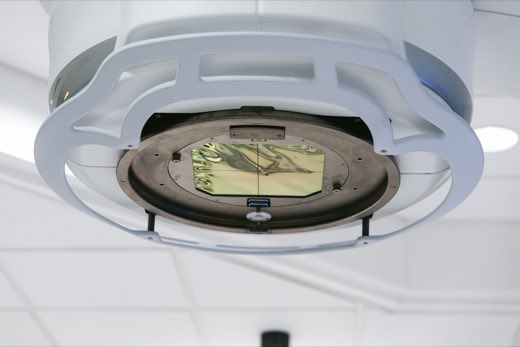
- High-intensity light and laser equipment. High-intensity electromagnetic-radiation equipment used on the body, such as lasers and intense pulsed light for hair or tattoo removal.
- Brain stimulation equipment. Equipment applying electrical or magnetic fields to the brain to modify neuronal activity.
A product that was never a device is now judged by the same clinical-evidence and post-market bar as one that always was. The compliance reality under Annex XVI
Classification by analogy, not by default
Annex XVI creates a second problem most manufacturers do not anticipate: these products have no classification of their own. MDCG 2023-5, the Commission's December 2023 guidance on qualifying and classifying Annex XVI products, works through qualification first — confirming a product actually falls within one of the six groups, or qualifies for an exemption — and then maps it to a risk class using the MDR's Annex VIII rules by analogy, read together with MDCG 2021-24's general classification guidance. Once classified, the product needs the clinical evaluation, technical documentation, and vigilance and post-market surveillance program its class requires under general MDR obligations — the same registration and UDI machinery covered in the site's EUDAMED mandatory-use timeline, not a lighter cosmetic-industry equivalent.
- Confirm which Annex XVI group applies. Test the product against MDCG 2023-5's qualification criteria, including any applicable exemptions.
- Classify by analogy to Annex VIII. Assign a risk class using MDCG 2023-5's mapping, since Annex XVI carries no classification of its own.
- Test both transitional conditions. Confirm lawful pre-June 2023 marketing and no significant design or intended-purpose change since — both, not either.
- Build the file the class requires. Construct clinical evidence, technical documentation, and PMS/vigilance to the assigned class, not the file the product shipped with before 2023.
None of this is exotic once a product is correctly qualified and classified — it is the same clinical-evidence and technical-documentation discipline any other MDR device runs on. The exposure is upstream of that: aesthetics and consumer-device companies that never treated the product as a device in the first place, and due diligence processes that credit an extended transition date without independently testing both conditions behind it. Manufacturers and acquirers who confirm qualification, classification, and transitional eligibility now are the ones with real runway left before the 2028 and 2029 dates arrive; those who wait for a Notified Body or a deal counterparty to raise the question will not be.
Frequently asked questions
What is Annex XVI under the EU MDR?
Annex XVI of Regulation (EU) 2017/745 lists six groups of products without an intended medical purpose that are nonetheless regulated as medical devices because Commission Implementing Regulation (EU) 2022/2346 sets Common Specifications for their risk management and clinical evaluation. Being listed in Annex XVI brings a product under the full MDR framework despite having no medical claim.
Which products without a medical purpose does Annex XVI cover?
Six groups: contact lenses or similar items introduced into or onto the eye; products introduced through surgically invasive means to modify anatomy or fixate body parts (excluding tattooing and piercing products); substances for facial or other subcutaneous, submucous, or intradermal injection such as dermal fillers (excluding tattooing substances); equipment to reduce, remove, or destroy adipose tissue; high-intensity electromagnetic-radiation equipment used on the body, such as lasers and intense pulsed light devices; and brain stimulation equipment.
Do Annex XVI products get a transition period?
Only if two conditions both hold: the product was lawfully placed on the market before June 22, 2023, and it has not undergone a significant change in design or intended purpose since. Products meeting both conditions and requiring Notified Body involvement get until December 31, 2028 (or December 31, 2029 if a clinical investigation is involved) under Regulation (EU) 2023/1194. Products that never required Notified Body involvement had no transition at all; full compliance was due from the June 22, 2023 application date.
Sources & further reading
- European Commission. Commission Implementing Regulation (EU) 2022/2346 laying down common specifications for products without an intended medical purpose listed in Annex XVI to Regulation (EU) 2017/745. eur-lex.europa.eu
- European Commission. Commission Implementing Regulation (EU) 2023/1194 amending the transitional provisions for certain Annex XVI products. eur-lex.europa.eu
- MDCG 2023-5. Guidance on qualification and classification of Annex XVI products — a guide for manufacturers and notified bodies (Dec 2023). health.ec.europa.eu
This article is provided for general informational purposes and reflects the regulatory landscape as of August 2026. It is not legal or regulatory advice. Confirm current Annex XVI requirements and transitional dates with the European Commission or qualified counsel before acting.